Words Speak To Me

Given that I would consider this blog post to be almost a continuation of my previous one, I would advise you  to read my most recent post on imagery and the Self-Portrait prior to reading the write up below. Click here to view the previous article.

***
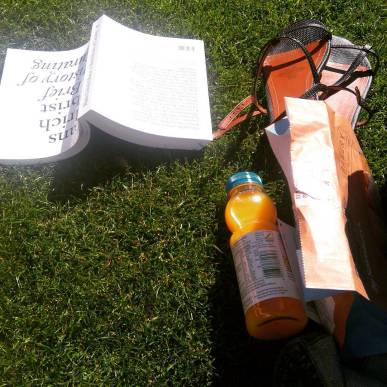
13687179_1140432052704433_1840139293_n1As well as recently thinking about the ‘necessity’ of images, both in life and on my blog (particularly alongside larger chunks of text), I have also been thinking about the lack of their necessity. About how the text in itself can become an entity through it’s strength. About how presently, I am more drawn to writing and to reading than to the creation of visuals. This is a shift which has occurred quite naturally, it has not in any way been a conscious decision. However, over summer I found myself merely dabbling in the making of artwork and instead ripping through several books as I devoured the words on the pages hungrily. I think this is an interesting transformation of interest, as I have always been immersed in the making of art and the documentation surrounding the process. However, I am now content to retreat and instead observe the process from afar. Watch others conceive and create. Take a practical sabbatical if you can call it that.
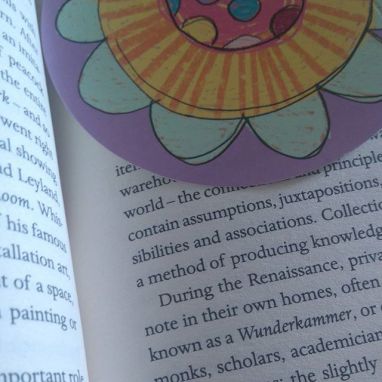
13741013_554567611334947_978616461_nWords have become my substitute for the studio. They have become my addiction. I think working so conceptually over the past three years is much to blame for this. Often, my notebooks were more precious than my sketchbooks. All of my thoughts and ideas that were so hastily sketched out as they entered my head, soon became a sacred collection for my own creative reference. Sol Le Witt and Eva Hesse were huge inspirations to me in their reliance on writing in relation to their studio practice. Sol Le Witt because he was a conceptual artist and his work would not exist without his words. Hesse because her diaries were her own backdrop to her work; her words were her refuge and respite from what could at times be quite a consuming mode of art making. Artists never stop. Their minds never turn off. They are always thinking, seeing, looking, observing. It is only natural therefore, that words on a page can become an escape and a freedom from the frantic energy of being an artist. I know that I myself feel unburdened when I write. That once my thoughts and feelings are down on paper they no longer physically inhabit my body. I believe Hesse must have felt the same.
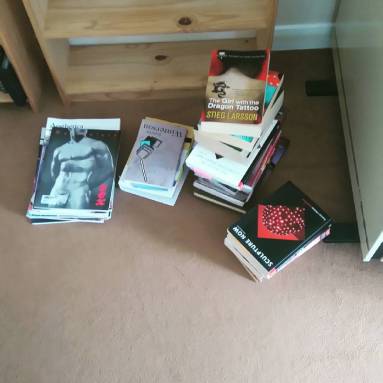
14350434_198530390560672_4054096995940302848_n1Following her tragic death from a brain tumour at the premature age of 34, her diaries were published. I am very conflicted over this action. On the one hand, I am sure it is amazing to have specific insight to her work and thought process. On the other, it is an invasion of privacy which reduces her work given the direct translations and observations the diaries provide. For Hesse, the diaries were a document of art and life. To her, the two were inseparable. However, I feel it is slightly tragic that her work is always read with this trajectory. In some cases her death and diaries inform her pieces almost more than the materials, colours and spatial relations do. Which of course is wrong, as no art piece should be spoon fed to its viewer. I could never read her diaries. It is my belief that they belong to her, were for her own sake and so I should find my own way of interpreting her life and work. I think this stance is probably because I sometimes keep a diary myself. Not often, just when I feel like it and need some form of release. Or I have had such a brilliant day that only words will do the justice of documenting properly. Either way, the diary is a personal entity which I feel should remain that way.
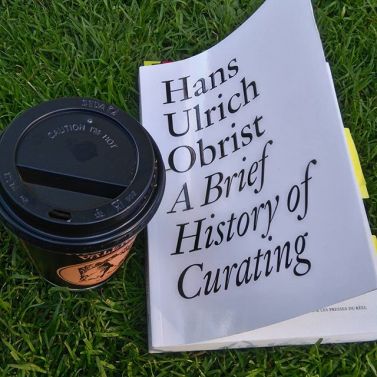
13768303_181033652308440_1820311018_nRecently I have had an urge to write in my diary again, mainly because I am feeling slightly lost. Although I am happy about my accelerated interest in the theory of art as opposed to the practicing of it, I am also left feeling slightly guilty. For someone who has been making art for as long as they can remember, it is strange to suddenly be left without the urge to make. I would go as far as to say I have an artist’s guilty conscience; that moment where you are not creating in your studio, mainly due to an inspiration dry spell, resonates with how I feel right now. I suppose however it is just a shift in focus for the time being. I am currently starting a Masters at Edinburgh University in Modern and Contemporary Art: History, Curation and Criticism. So being more drawn to reading, like bees to honey, is only a natural consequence of this. I think it is just strange for me, yet another thing I am unfamiliar with at the moment. However, instead of having the urge to draw and drip paint from giant canvases in a studio, I just need to adjust. I will now dedicate my time to reading my theories and prose in a quiet little Edinburgh cafe or the gardens and fully absorbing the context to contemporary art making, knowing that in time I will start making again.
 

Self-Portraits

I’ve been thinking a lot about imagery lately.

I have an exhibition that I keep meaning to return to so that I can write about it, as wherever possible I far prefer sourcing my own images. Otherwise it kind of feels like stealing. Especially when I have the chance to photograph work in the way that I, as opposed to others, see it. Photographing and capturing something visually is as much a language as a piece of writing. This urge to document and provide my own source work has led me into thinking about the necessity of images and how we use them to frame both our written texts and our lives. Particularly in terms of how people constantly feel the need to document not only the world around them, but themselves. The way in which we can convey, warp and shape the reception of our persona through our careful selection and sensoring of our own imagery. How, through specific choice we can create the perfect presentation of ourselves. A facade that once the spell is broken and the true self becomes revealed, can never return to the idealised perfection. Once the mask has been removed, there is no return.

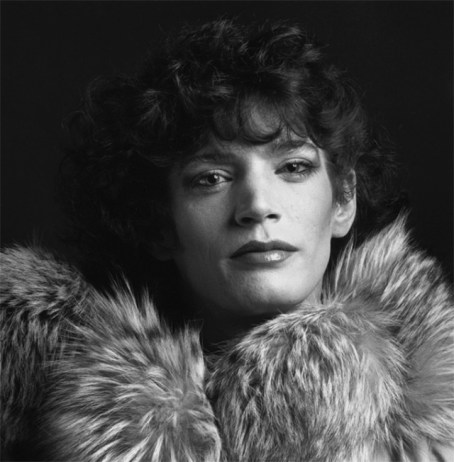
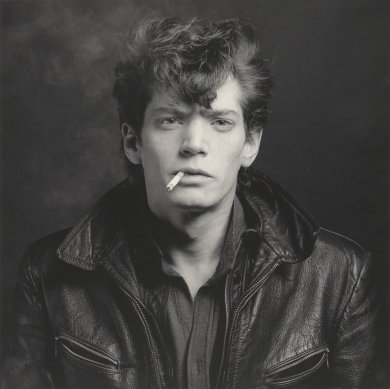
I find this very interesting, as in the sea of images out there, people attempt to make their own mark; to create an identity for themselves and a projection for the world. I think this way of thinking and my interest in this peeked following my visit to the exhibition at the Portrait Gallery. ‘Facing the World: From Rembrandt to Ai Weiwei’ is an exhibition that I have now visited…four times. I would highly recommend going more than once. Or even, like myself, splitting your visits into two so that you view only half the exhibition at first and then return another day to view the rest of it. I have never done this before, however I found it incredibly fulfilling, as it enabled me to better absorb the artwork as my mind was not too saturated with it all at once. It gave me more time to reflect and made me realise the works that I was truly interested in. It’s difficult, as there is so much to gain from every work in the exhibition, however the self-portraits that really struck a chord with me were Andy Warhol’s and Robert Mappleforth’s. You could argue I am cliched in my Warhol orientated interest, he is after all, renowned for his self-portraits. However these were works that I have never studied up close and they had quite the impact on me.

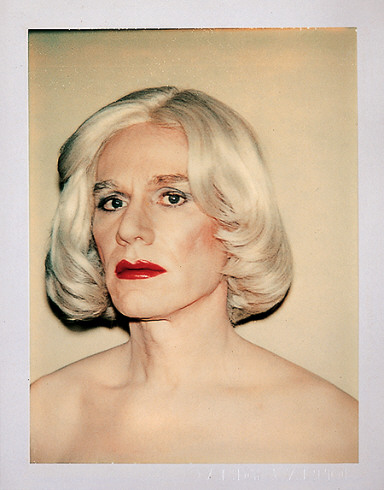
warhol-2

Warhol in drag. Yes, I’ve come across it before, but there was something about it in the context of the exhibition. The scale I should have realised were small poleroids, whereas when I’d seen the work in books, I’d mistakenly imagined it more A4 or even large scale. The size of course, changes the meaning of the self-portrait entirely. In my imagination, the large scale of the portrait was garish and intruding to the viewer, cocky even. However, when I viewed it during my ‘Facing the World…’ visit, I was struck by the intimacy that the poleroid scale allowed. I had to stand up close to study it. There were four of these small self-portrait’s of Andy’s on the wall and from afar all you could see was the stylish black frame, you could not make out the facial features. Yet upon close inspection there was so much to see and draw out, a rawness and an insight which felt personal and floor shattering. Almost as if I was an intruder catching Warhol in a moment which belonged only to him.

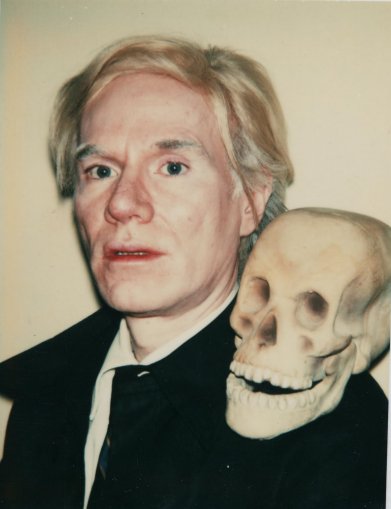
warhol-skull

Suddenly, my assumptions of Warhol with his elaborate pop art flamboyancy melted away and I was left with this striking affinity I felt for the pieces. I have read Warhol’s autobiography ‘The Philosophy of Andy Warhol: From A to B and Back Again’ and I must say that it changed the way in which I viewed him. I think changed is actually an understatement. It revolutionised the way I view him. I feel I have a far greater insight and understanding to both his methods and intensions of working because of this book. A lot of people like Warhol and his work. A lot of people don’t. It’s always the people who don’t like him to whom I recommend read this book. I can never decide as to how I feel about him exactly; I am fascinated by his life in the Factory and his relationship with celebrity icons like Eddie Sedgwick, his intentionally monotonous yet revolutionary films like ‘Empire‘, yet I am also reserved in my interest. His fascination and fear of death is perhaps what speaks to me most. Following the assassination attempt on his life and his near-death experience, Warhol began to explore this theme in his work. He created silk-screens of gruesomely smashed up cars wrapped round trees, he did portraits of celebrities like  Marilyn Monroe and Elvis, both of whom supposedly died of a drug overdose. In among his colourful depictions and his Campbell’s soup cans, lies tragedy in the work of Warhol. There is a personal undercurrent that hums quietly underneath the elaborate facade and  his artistic persona, which once exposed, is truly magnificent. It is this undercurrent and its subtleties which I am drawn to with Warhol. I found therefore found these portraits very touching and almost kind of melancholy.

robert-mapplethorpe-fashion-sh37415

I viewed the self-portraits of Robert Mapplethorpe with much the same air. It feels as if there is an inherent sadness to his work, one which you can’t escape from in the process of viewing. Perhaps it is his striking eyes, which pour so deeply into your soul that you can’t help feeling as exposed as he is in his portrait. Or perhaps it is the monochrome, the lack of colour an allusion to a lack of life. Yet his portraits are filled with life, with intimacy and with themes that are dictated by the erotic. Perhaps it his aura, the knowing tilt of the head and the carefully applied mascara. The sensual addition of the fur. Or perhaps it is merely the contrast provided by his opposing self portrait that was in the exhibition, which is infused with a reasserting masculinity. Mapplethorpe employs the same dark backdrop, yet creates an entirely contrasting presentation of himself. The hardened expression, the tough leather jacket. The casual cigarette protruding from his full-bodied lips. What is it about Mapplethrope that is so sensually infused? Is it the chiseled cheek bones? Or is it his defiance? His ability to present himself in an entirely modest, yet simultaneously proud way?

mappleforth

I think Mapplethorpe’s work has a solid beauty to it.You can’t ignore the sensual air, or the sculpted bodies. For me, the use of monochrome is a very striking elemt. It removes unnecessary details from the work, the fact that colour is absent forces you to focus more on the features. The depth and tone created through the clothing texture (or lack of it) and pure human flesh is striking. Given the iconic features of his work and the raw portrayal of himself and his subjects, I think it is safe to say Mapplethorpe is one of my favourite photographers.

‘Facing the World: From Rembrandt to Ai Weiwei’ is an exhibition unlike any I have seen before. Mainly due to the fact I have never before encountered a portrait-based exhibition. The range of work created quite the pictorial journey with incredibly interesting content, particularly given the evolution of the portrait itself. How these days, the full human body is as much a portrait as more traditional depictions which include only the upper torso. Yet for me, it was the works of Warhol and Mapplethorpe that stood out. I felt that they were the most successful in capturing the essence of themselves and conveying who they were or what they could be. I was spell-bound by their works to the point I felt as if there was a direct correlation between myself and their portraits. As if I, stood staring up at their work as I occupied the gallery space, ceased to exist for a moment. I disappeared into them; I became irrelevant. This ability to strike up such a close and inclusive dialogue with the viewer can be a rarity within an artwork, but in this instance I left with a lasting affinity towards the works and their subjects.

Images sourced from:

http://67.media.tumblr.com/ead8fd2dbfd137095a33ae12ed892ca3

http://theredlist.com

http://www.tate.org.uk

Surreal Encounters: Collecting The Marvelous

img_2623

Installation shot including various works by Salvador Dali

“Everything tends to make us believe that there exists a certain point of the mind at which life and death, the real and the imagined, past and future, the communicable and the incommunicable, high and low, cease to be perceived as contradictions.”
– André Breton, Manifesto of Surrealism

Recently I visited the Scottish National Gallery of Modern Art on what I thought would be a brief afternoon excursion. Almost four hours later I emerged from’Surreal Encounters: Collecting The Marvelous’ enlightened and inspired. Marvelous; there could not be a more apt word to apply to this broad collection of artworks. Immediately upon entry you are greeted by renowned and famous names including Picasso, Man Ray and Duchamp. Seeing a collection of those artists merely in the corridor – before I’d even entered a room – made me realise the sheer stature of this exhibition. This was and is quite the collection of Surrealist works. Never before have I seen so many Dali and Magritte pieces clustered in such close proximity. The result was mesmerizing. I felt like Alice in Wonderland tumbling down the rabbit hole into a world of dreams, blue endless skies, obscure depictions and dripping, blurring creatures. For someone who has read countless books on Dada and Surrealism, two art movements that changed and shaped the course of art history, it was like walking into a shrine dedicated to works of the past. I couldn’t quite believe what I was seeing.

img_2624

Installation shot hosting the works of René Magritte

The exhibition was beautifully curated and very insightful in terms of how the collections came about. As a viewer you are given an in depth account of how Roland Penrose, Edward James, Gabrielle Keiller and Ulla and Heiner Pietzsch came to acquire the works. This was done through a series of conducted interviews. I thought this was a very effective component of the exhibition as in among all of these monumental and historical works by Miro and Magritte, there were TV screens with the interviews being played out. With the giggles between partners Ulla and Heiner Pietzsch echoing throughout the space as they discussed their plans for their collections, I couldn’t help but feel that their stories brought the collections and the artwork even more to life. As a viewer, not only were you busy plummeting into a whimsical world within the frame and trying to decipher and make sense of something so non-nonsensical, but you also became aware of how it came to be hung on the wall in front of you. The care and thought that went into the collections and the articulate eye required to amount such works, was extraordinary. It was fascinating hearing how Gabrielle Keiller had realised Duchamp’s artistic potential and decided to gather his works. Of course it was equally fascinating seeing the works themselves; Duchamp’s mini replication of ‘The Bride Stripped Bare By Her Bachelors‘ was rather mesmerising in itself. 

feuille-de-vigne-femelle-female-fig-leaf-1950-1961

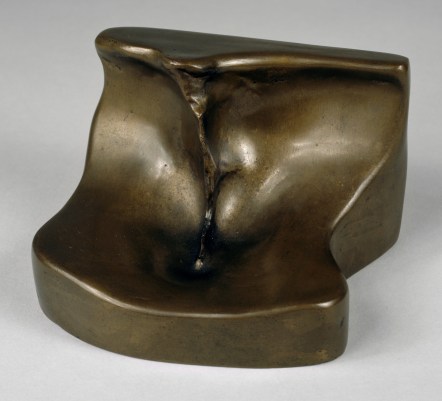
‘Female Fig Leaf’,  Marcel Duchamp, 1961

Marcel Duchamp is an artists I have studied very closely, so for me seeing his work was kind of like seeing a celebrity on the red carpet. His concept of the Readymade turned the art world upside down when he declared a urinal a work of art. A Readymade is a work that consists of objects that were, believe it or not, ready made. They become an artwork essentially through the declaration of the artist. This of course caused outrage in the artworld at the time and Duchamp’s urinal, or ‘Fountain‘ as he named it, was in fact refused entry to the Parisian Salon des Indépendants. At the time it was revolutionary and outrageous, now this act and the creation of the readymade is just another dictionary term in the art collection alongside Minimalism, Impressionism and all of the other movements which were not accepted at the time as they are presently. I loved’Female Fig Leaf‘ (above), I think it was one of my highlights of the exhibition not only because it was a Duchamp piece, but also because of its cheekiness. It is an imprint of the female genetalia, which Duchamp actually gifted to his wife. 

94d7ac8dcb40d950a6b342fcf3d010dd

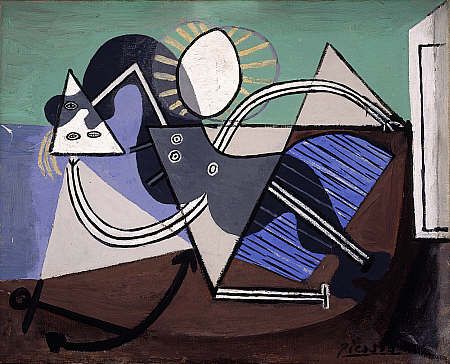
‘Nude Woman Lying in the Sun on the Beach’, Pablo Picasso, 1932

Picasso, dare I say it, has always been very hit or miss for me. I can appreciate his work, his technique, his skill and his status. However his work has never quite struck the cord with me on a personal level. That is of course with the exception of ‘Guernica’ (1937), one of his most famous works depicting the horrors and brutalities of war. However, in this Surrealist exhibition, I was for once incredibly taken by a Picasso piece in the form of ‘Nude Woman Lying in the Sun on the Beach’. It absolutely fascinated me. The title provided the perfect insight into the subject of the work and the colours and composition were incredibly satisfying to my eye. I love the muted and restricted palettes of mint green and baby blue alongside the triangular creations. I was so drawn to this work that I even bought a postcard of it as a momento to the exhibition! 

coupleauxtetespleinesdenuages_dali

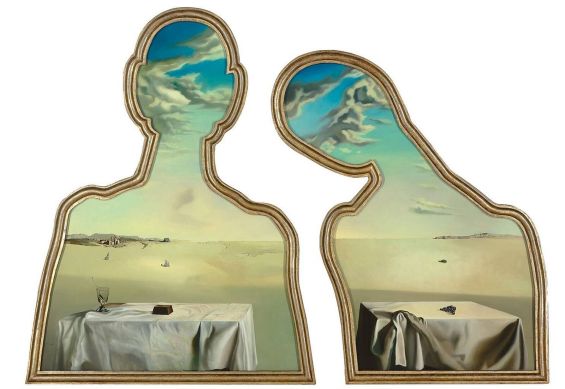
‘Couple aux tȇtes pleines de nuages’, Salvador Dali, 9136

‘Surreal Encounters’ was surreal for me in more ways than one. It was of course surreal in the sense that I was seeing the biggest body of Surrealism I have yet witnessed in my lifetime, but it was also because I was in a dumbfounded haze of surreal disbelief at seeing works such as these. Particularly the large scale Dali pieces. The skill and techniques, the mastery Dali displays with his paint and the colour choices and balances are all compiled together to form compositions so breathtaking that I was grateful to be able to occupy the seats dotted throughout the gallery space! It was one of those exhibitions where you really have to sit down and just breathe in and absorb the work in front of you. Realise how insignificant you are when faced with these grand works, grand scales and even grander artists. There was a room filled only with Dali and Magritte pieces which has to have been my favourite. Mainly because René Magritte is in fact one of my favourite artists. Coming from someone who has a very long list of favourite artists, that is quite the compliment to Magritte. I will never forget the first time I saw his work. It was at The Peggy Guggenheim Collection in Venice. Again, there was a room filled primarily with Dali and Magritte and I remember feeling as if the air in my body had been physically knocked out of me. I had only ever come across these works in books or on the internet prior to that moment and to be greeted face to face with the brush strokes (or lack of them) of Magritte was truly one of my most memorable moments in my experience of viewing art.

14134560_294394854251021_1491073811_n1

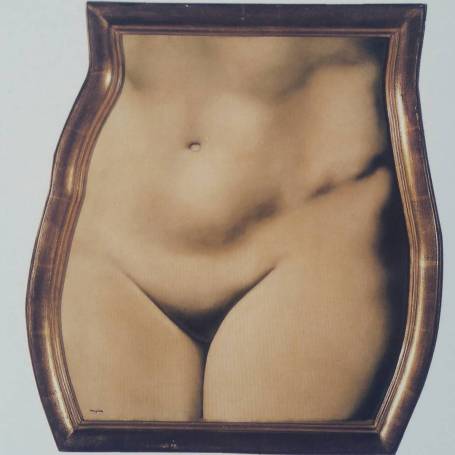
‘La Représentation’, René Magritte, 1937

Walking into the Dali/Magritte room in the Modern Art Gallery was very much like experiencing my Guggenheim epiphany all over again. Seeing Magritte’s countless sky scapes, his mysterious face reflections and erotic depictions cast a spell of serenity over me. Time seemed to stand still as I immersed myself in the works, trying to read them and imagine what strange things had been blurring through the mind of Magritte as he painted. I tend to avoid reading the information that sits alongside a painting, at least until I return to the exhibition a second time, as I prefer to formulate my own ideas and opinions about a piece before giving in to the direction leaflets and writings provide. Trying to read a Surrealist work however is quite the task and I decided that the best way to do this was to free my mind. To allow my conscious to let go of assumptions and float and drift instead into more sporadic realms.
Eine Kleine Nachtmusik 1943 by Dorothea Tanning 1910-2012

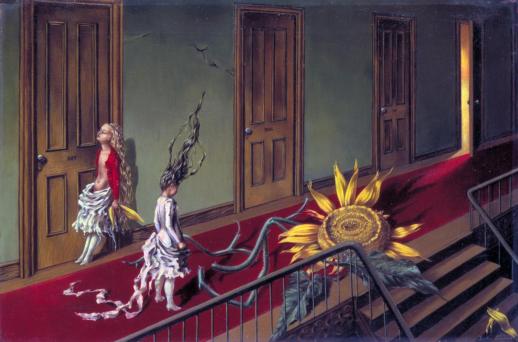
‘Eine Kleine Nachtmusik’, Dorothea Tanning, 1943

I think ‘Eine Kleine Nachtmusik‘ was one of my favourite works within the exhibition (not counting all of the Magritte’s, that goes without saying given how big a fan I am!) However, I have never come across Tanning’s work and this piece really stuck with me. It’s predominantly the bold colours that appeal to me; the blood red carpet against the sunshine yellow of the sunflower. The angles of the staircase alongside the open door at the end of the corridor. The way in which the girl’s hair appears to be sucked and gusted upwards towards the ceiling, yet she remains stood still and straight as if the presence of a giant sunflower on the stairwell was a perfectly natural occurrence. Yet there lies the success of the Surrealists; the ability to take the abnormal, the strange, the absurd and transform it into something so nonchalant that we begin to question our own senses of normality. They take the ordinary and transform it into such an extraordinary that we are left both stunned and speechless yet simultaneously brimming with an overflowing cauldron of ideas in our heads. In heads thatupon witnessing these works of art suddenly feel too small for all of these bizarre and beautiful notions. Consequently, the only thing that we can do is release ourselves to the surreal and the experience it provides. Needless to say, this exhibition succeeded in providing that experience and more. I was left reeling and contemplating it for days and this contemplation will continue, as will our own surreal encounters. 


We were not allowed to take photographs in the exhibition,therefore my images are sourced from the following websites:

https://www.nationalgalleries.org

http://georginacoburnarts.co.uk

Home


Edinburgh Escapism

14156303_239072793156967_689552720_n

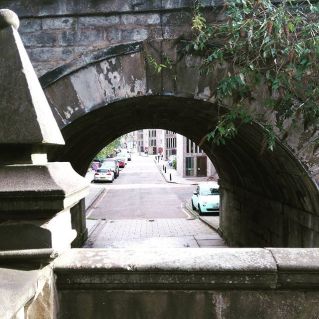
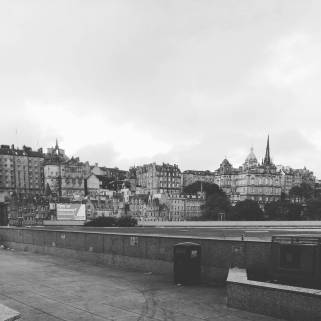
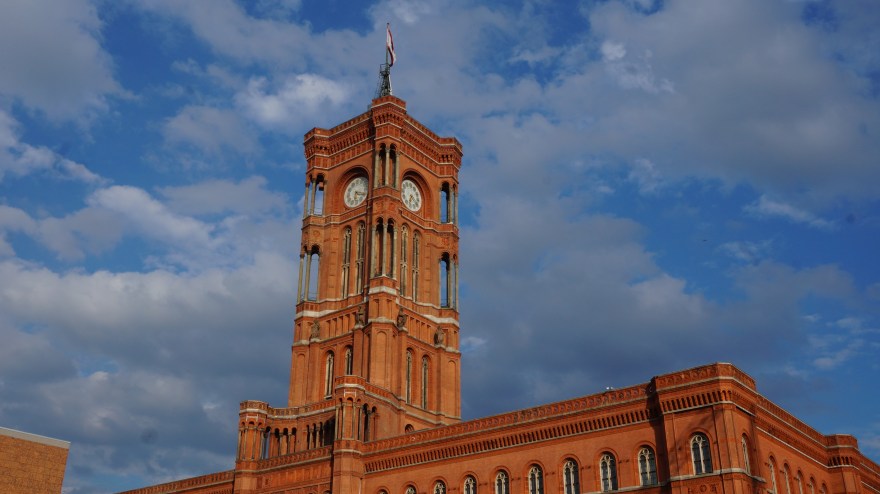
I recently moved to Edinburgh and am still configuring its layout and exploring the city almost a month later. I feel this sense of exploration will be constant the whole time I am here. Edinburgh is one of those cities where you are never stuck for things to do, or places to see, or areas to explore. For someone who enjoys long head clearing walks as much as me, it is the perfect place. Yes, during tourist and Fringe Festival season the streets were packed; people crammed against each other on the pavement unable to overtake or cut through the crowd to cross the road. It was heaving. Now that the Festival is over, it has quietened down somewhat. Much to my relief, as I am not a huge crowd fan. I am however, an architecture lover and here in Edinburgh, everywhere you look there are beautiful buildings! There’s the Castle on the hill, there is the quaint area of Stockbridge which was so picturesque I didn’t mind getting lost! There are streets filled with older buildings, the  Scottish National Galleries boasting proud pillars at their entrance, the train station even sits nestled opposite Princes Street Gardens. I feel like I am having an affair behind the back of all the other cities I have visited given Edinburgh is all so breathtaking!

14073114_309646726064443_489540460_n(1)

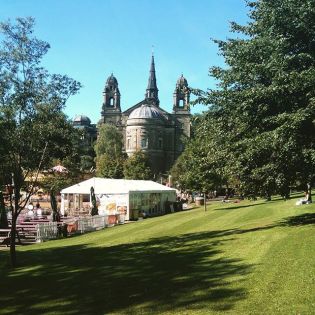
It is a truly beautiful place and having visited Berlin this summer and been so consumed by its incredible culture, I can’t help feeling that a bubbling city like this is the creative starting point for me. It’s the energy, it’s the atmosphere; both of which are infectious. I’ve visited Edinburgh for countless day trips in the past, so it’s strange having to remind myself I am now a resident needing to commit an Edinburgh postcode to memory! Although it’s going to take some adjustment and I am still settling in, I am of course very excited by it all. Who isn’t with a city move?I feel as if the city has been waiting for me. As if this was the place I was meant to come back to. It’s funny how humans can have such an affinity with a place, but I feel with the countless art exhibitions and the constant creativity, this city could not be more perfect for someone like me. It’s picturesque and it’s peaceful. I have recently spent a lot of time sat reading in the Gardens, just people watching and absorbing the city and it’s occupants.

14031610_944416692352141_1008588632_n

I think contemplation is incredibly important during times of change and transition. Fortunately I have had the time for that this summer. Usually life is so busy and consuming that we forget to stop and think. We forget to put our phones down and not check them constantly. We forget to look out the window instead of choosing a playlist. We forget to be dreamers and instead glue ourselves to screens. People in airports, people on trains, they are all frantically typing away, scrolling down their tablets. I often feel saddened by this, because with all the days in our diaries crammed full of meetings and appointments, it’s difficult to slow down and tear yourself off the rollercoaster of life. Which is why I think this move has been so good for me. I am guilty of being consumed by the pressures of modern life; of forgetting to eat lunch and running from one meeting to the next. Yet I feel Edinburgh is a place where I can still balance a crazy, wild schedule, yet also make time for myself within the city.

14073161_327103797622672_442429377_n

I feel that the amount of greenery everywhere in Edinbrugh provides a refreshing escapism from the rooms we occupy. Glancing round, there isn’t just granite and infrastructure, but vast expanses of nature serving a reminder that our busy lives are just a tiny microcosm in the universe. Little streams that gush and flow, the roses in the Gardens, the bees humming through the trees and the squirrels tamely venturing out all exist quite happily alongside the dull thrum of traffic and trams. All of the natural elements provide a reminder that we can stop and look. We can breathe in and think. We can sit down and we can start again.
Visual Essay on Architecture

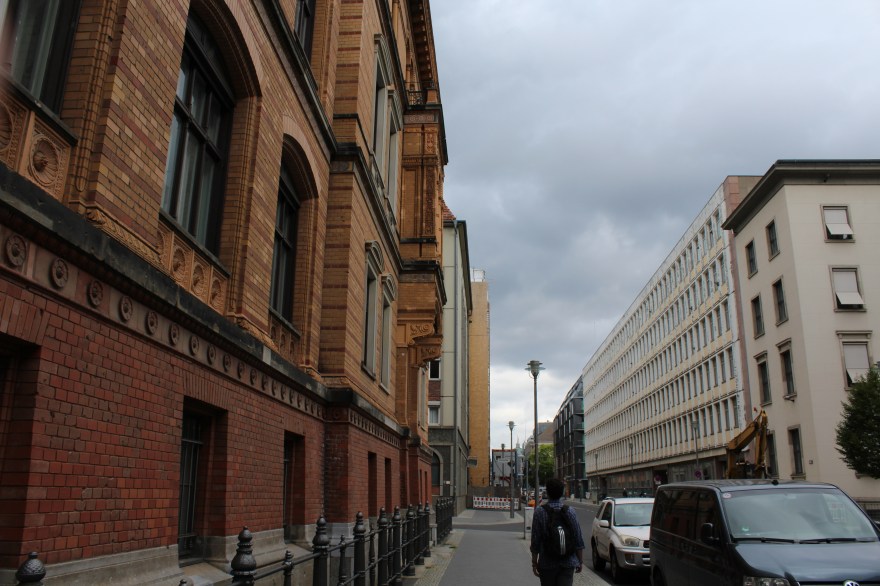
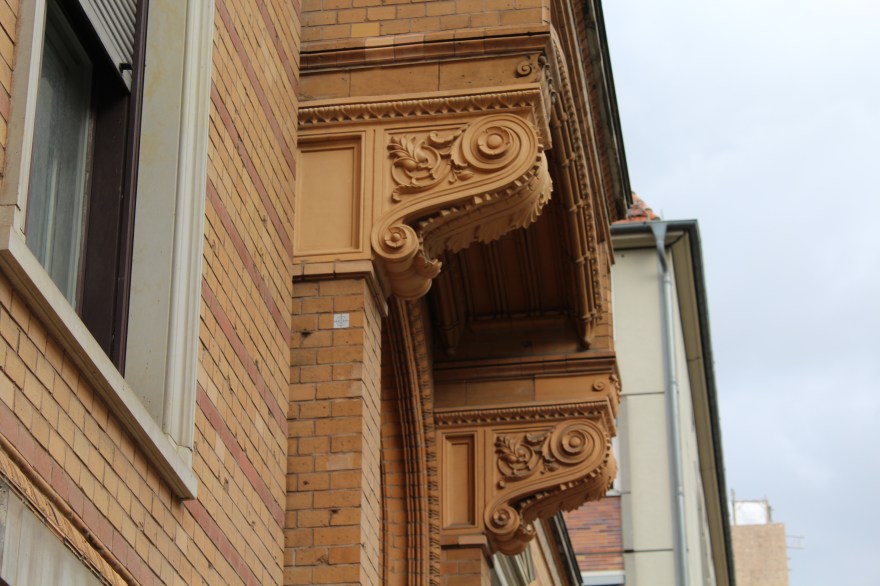
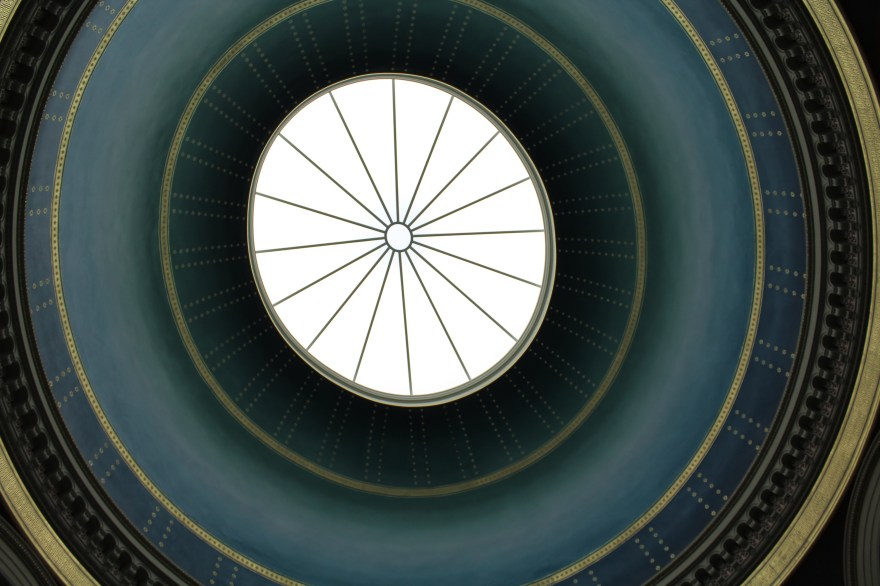
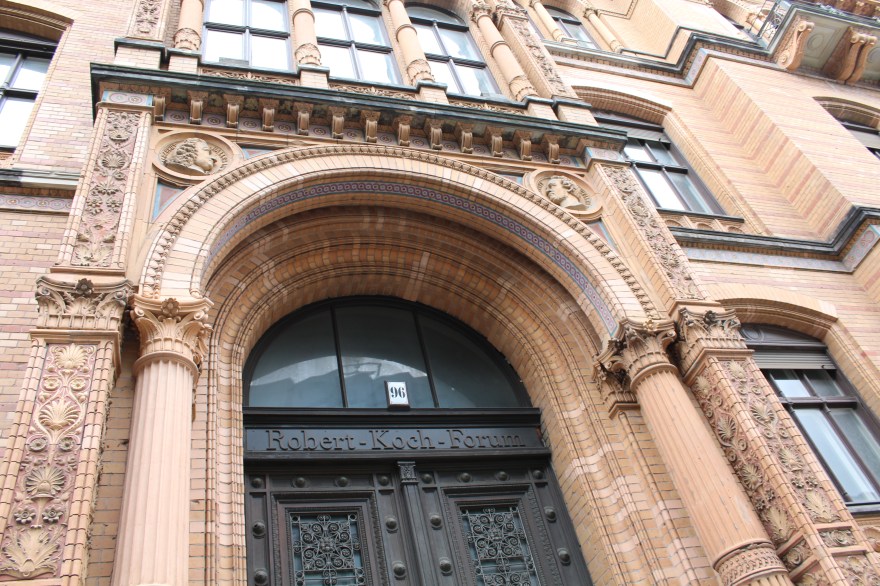
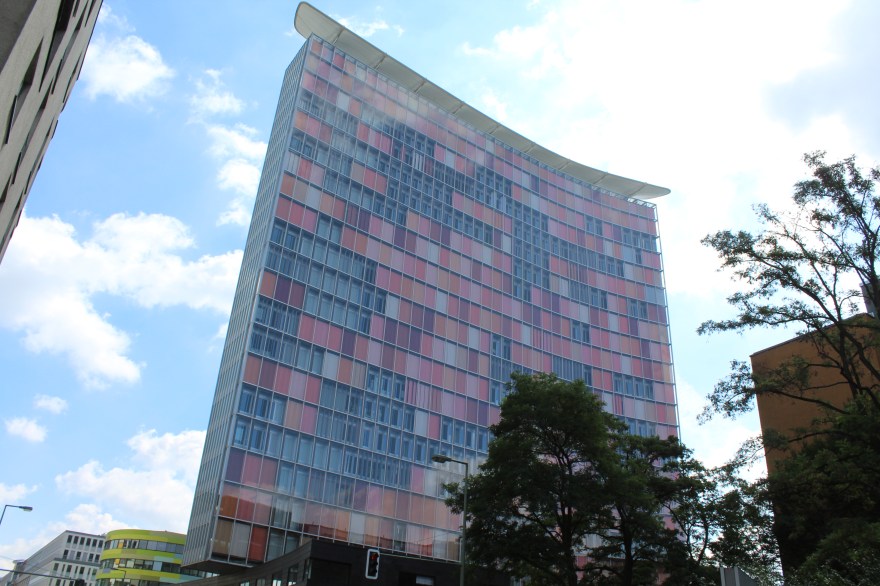
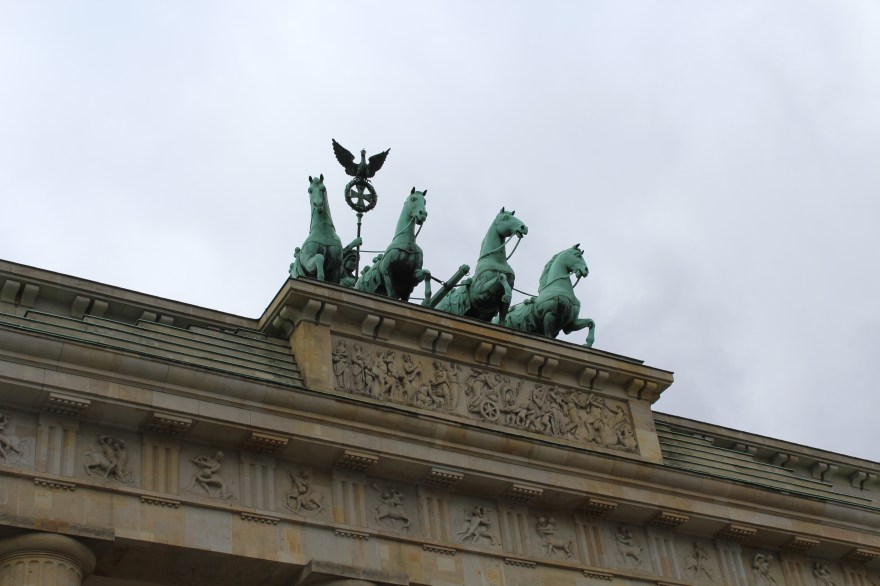
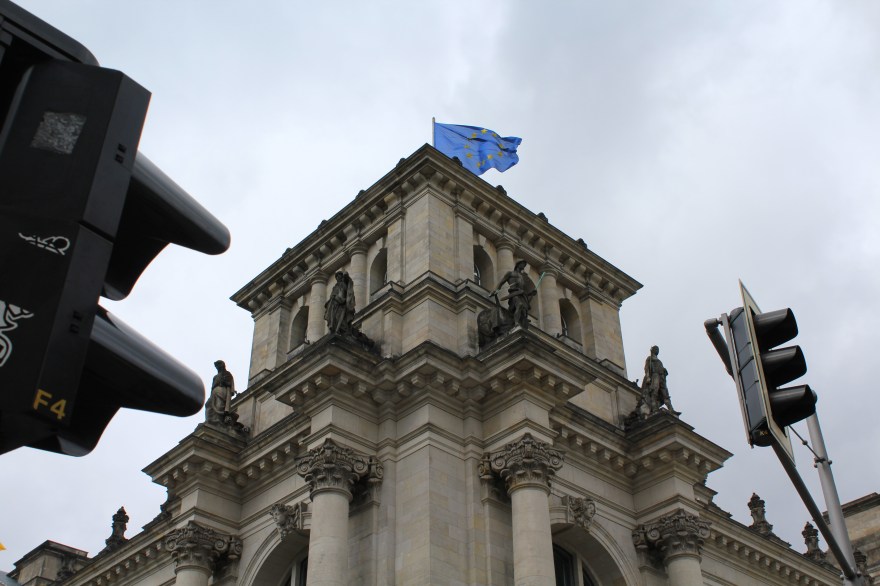
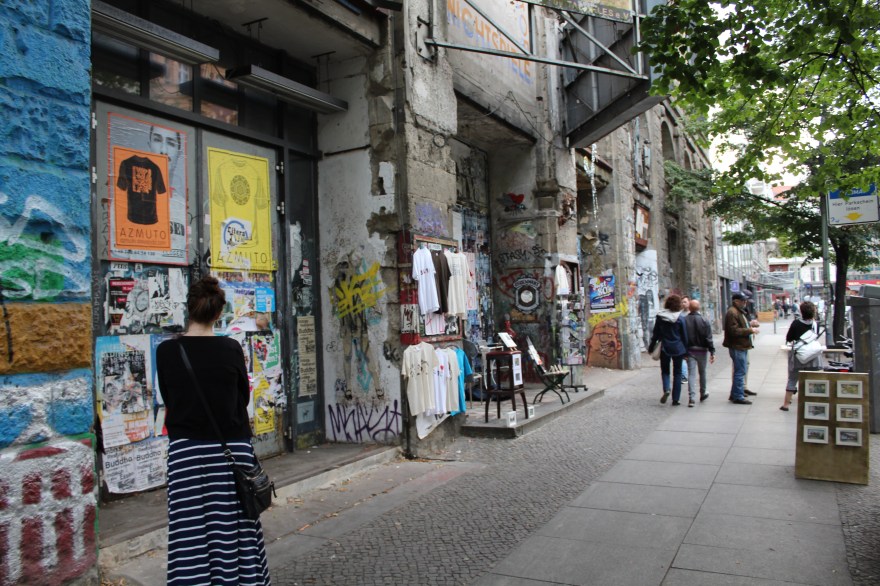
Being in Berlin gave me so many revelations that I can’t stop thinking about. It also, much to my delight, reignited my love for architecture. I did a project on architecture as part of my Art coursework at GCSE level, but have never returned to it as a topic since. Partly I think because I was put off by the result of my naive endeavors. At GCSE level I explored Omani architecture with it’s beautiful mosques and arched doorways, as well as more modern twisting architecture in the form of the Armani Hotel. I feel the way in which I approached it at the time was far too broad; I just plunged in with the only focus being ‘architecture’, meaning the results were weak due to the lack of specificity. Now I look at things with more refinement, far more critically and only really pay attention to things that ignite my utmost interest. Which pretty much all of Berlin did! I always remember someone telling me to look upwards as you walk round cities, because that tends to be the place you see the most exciting and unexpected things. Watching ‘The September Issue’ (a fashion documentary) years ago also made me think about how and where I should be looking as what was said has stuck with me. In the documentary, Creative Director at the time, Grace Coddington, talks about how you should never shut your eyes and sleep, but always look out the window of a car and absorb the world as it flashes by. Never miss a minute.

Walking around Berlin allowed me to contemplate the city and its structures at my own pace and I am slowly starting to formulate the idea of exploring the bridge between architecture and life within my artwork. I have studied and worked with the human body for so long now, I feel it is time to refine even that as a topic.Possibly merge it with my revised interests in the buildings that surround us on a daily basis. Culture of course comes into architecture, as does history. Not just of the buildings themselves, but of how infrastructure has developed over time. Perhaps a comparison between Egyptian architecture and the historical buildings of Berlin will feature? Perhaps a trip to Barcelona to finally see the work of Antoni Gaudi will happen? I don’t know. All I know is that I want to explore more. I want to try broadening the palette of my focus. So again I have resorted to a John Berger style visual essay on the architecture of Berlin.
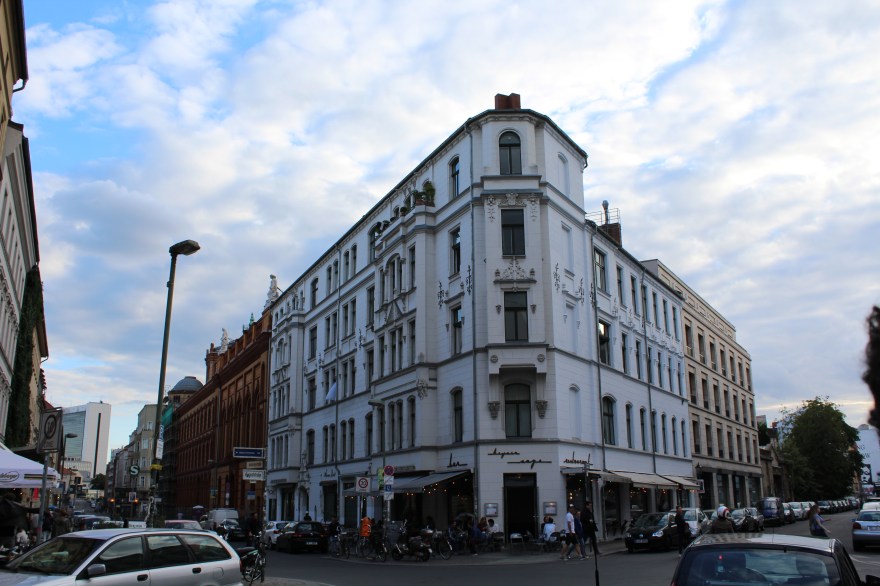
IMG_9311

IMG_9298

IMG_9416

IMG_9418

IMG_9312

IMG_9407

IMG_9310

IMG_9342

IMG_9422

IMG_9322

IMG_9295

IMG_9296


Berlin Berger Style

Recently I have been reading the art critic John Berger’s two books ‘Ways of Seeing‘ and ‘About Looking‘. Both are truly inspiring reads; Berger’s insights highlight things you think or notice on a subconscious level, but had never fully come to realise yourself. He is like the stepping stone to realization. He draws out your way of thinking and forces you into a mode of questioning that can be applied to everything from that point onwards. ‘Ways of Seeing’ was particularly eye-opening for me; the way in which I read paintings, their composition and their form has forever changed for me following these two poignant books.
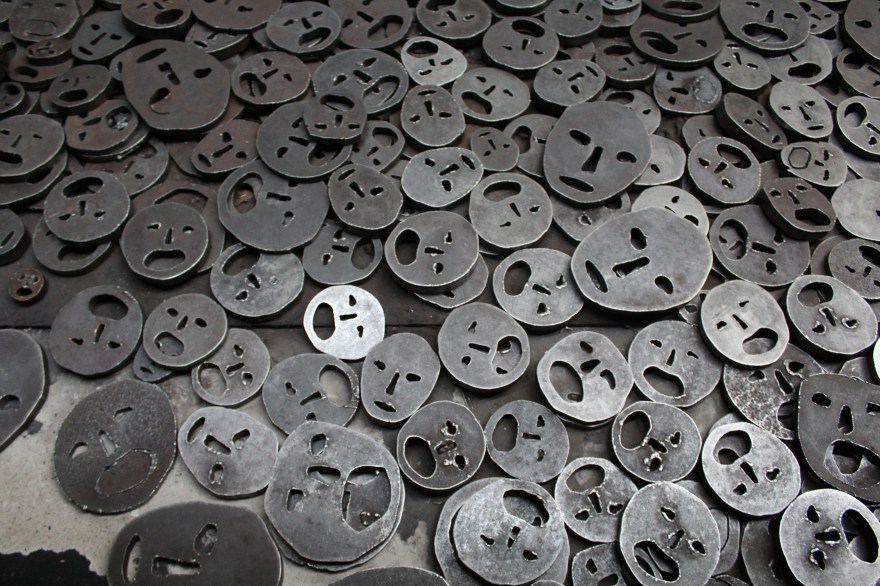
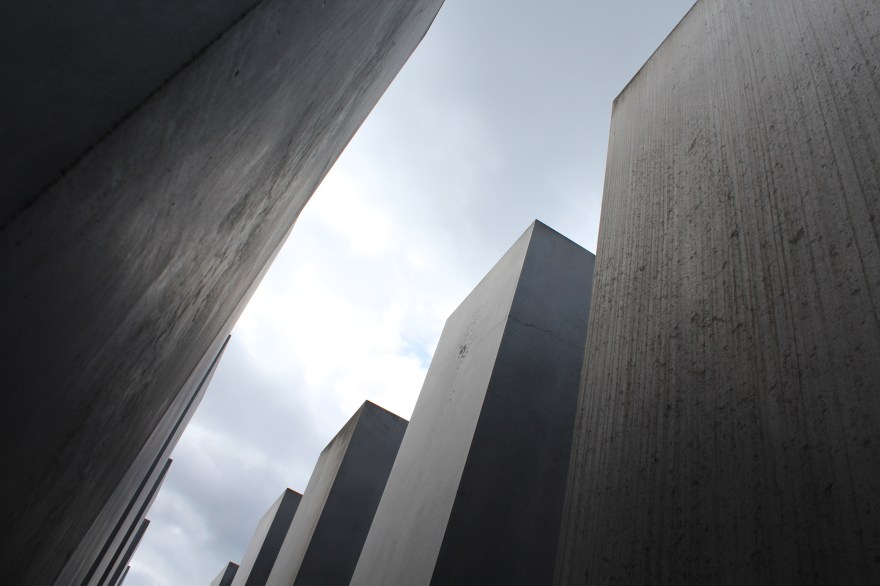
What I particularly liked about ‘Ways of Seeing’ was it’s composition; it is split into concise sections which are well structured and coherent in their point. Yet between each of these sections is a visual essay, an essay composed entirely of images. This was unlike anything I have ever seen before. Each visual essay acted as an introduction to the subsequent written essay. This forces you to try and decipher the images themselves in isolation from the written word, before having Berger go on to elaborate their context in the next chapter. I thought this was an incredibly interesting way of conveying an idea and I was delighted when I was able to comprehend most of the visual essays. Recently I have been drawn more to visuals than writing, particularly with all of the interesting content I follow on Instagram in the form of various galleries and art collectives. So reading the Berger books and discovering the visual essay came at the perfect time for me. In Berlin I was looking, sketching and trying to capture what I saw. I needed a more instant way of absorbing the city which writing did not quite satisfy and so visuals became my supplement tool. Following all of this visual inspiration, I thought I would have a go at compiling a visual essay/visual summary myself of our time in Berlin and how I saw and perceive the city.

IMG_9424

IMG_9303

IMG_9331

DSC00835

DSC00898

DSC00895

IMG_9426

IMG_9442

IMG_9313

IMG_9417

IMG_9351

IMG_9386

IMG_9341

Photo credits also to Jamie Strathearn.

Beautiful Berlin

13735919_1762331277356099_202182029_n

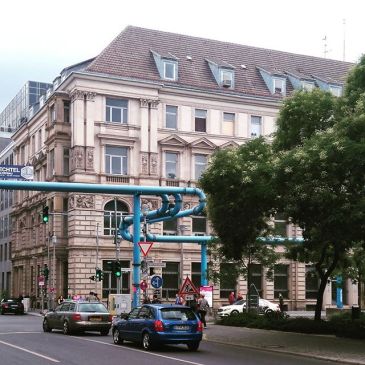
It’s been a long time since a city has inspired me as much as Berlin. Amsterdam was absolutely fantastic – there was so much to see. Our art-orientated sightseeing ranged from seeing traditional artwork at the Van Gogh Museum to more contemporary works at the Stedelijk, Amsterdam’s equivalent of New York’s Museum of Modern Art (MoMA). However with Berlin, it’s different. You’re not just entering buildings and spaces to look at the art; it’s everywhere. It’s in the buildings, not just physically, but inherently. It’s ingrained as part of the architecture, it’s on the street, down alleyways, on subway routes, it’s even encapsulated by people’s eclectic mix of clothing. The city seems to pulsate with this artistic aura, which threatens to overwhelm you it’s so inspiring. You feel as if you’re going to burst with this creative warmth brewing in your stomach as you take it all in!

13643712_1760636187554487_663881564_n

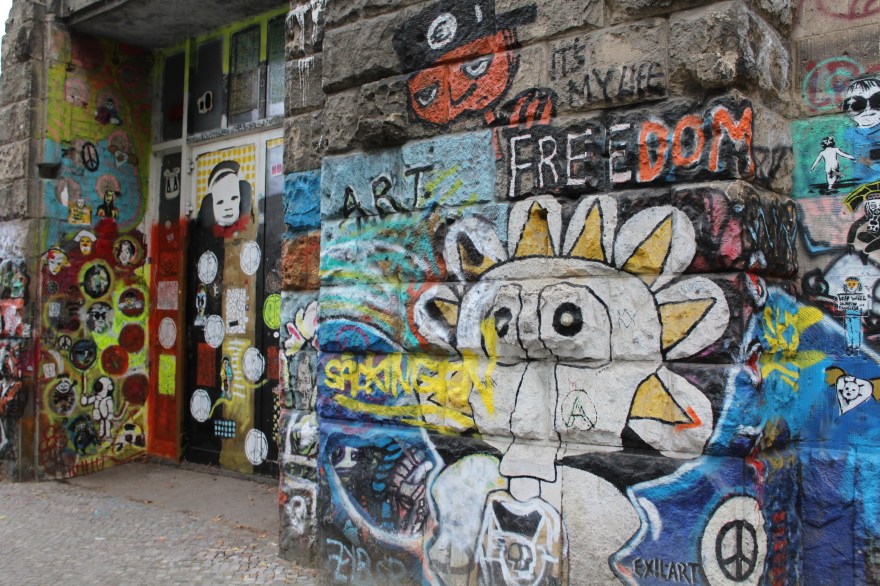
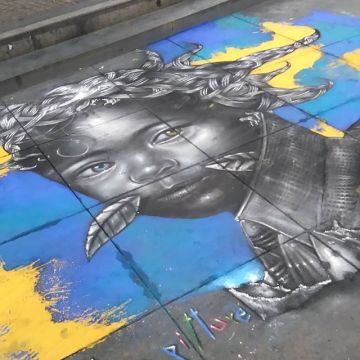
The history of the place seems to enhance this sense of creative energy, particularly given the fall of the Berlin Wall in 1989. With the fall of the wall, came the fall in both political systems and social barriers. Berlin realized a new kind of freedom that had never been felt before and consequently aspects such as the music scene flourished as people endlessly celebrated the reunification. Given their history it seems people in Berlin have something to say; it’s as if the years of oppression made them realise that they want to be heard. With transient chalk-based artworks on the pavement, alleyways bursting with colourful graffiti, the life and soul of the city can be found anywhere and everywhere. I think this is why it had such an impact on me. The creative culture of the city was not confined to sketchbooks and galleries, or exclusive artistic spaces. Instead it was living and breathing on the street, trickling into the galleries from outside.

14026766_916042935191772_370954739_n

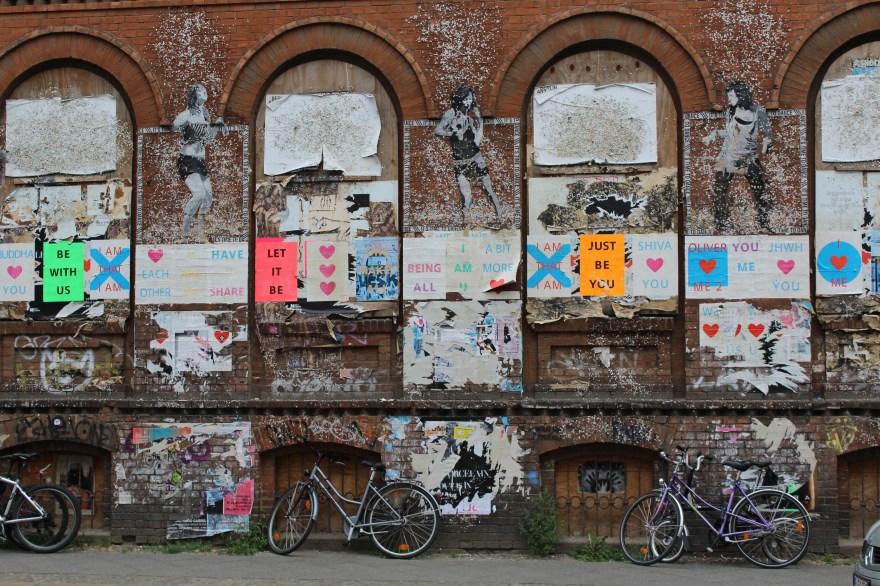
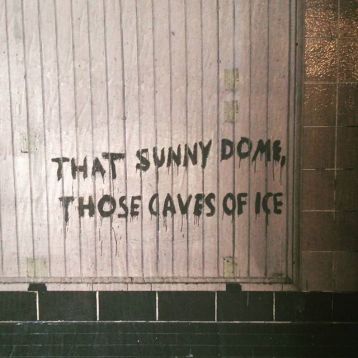
Walking through this cultural hub that is Berlin really focuses your mind. Because there is so much to absorb, you realise what it is you want to pinpoint and fixate on; what explorations you want to further. I’ve always been fascinated by graffiti, however in the past it was more of a subconscious fascination. It was only as we walked through Berlin and I was catching glimpses of it in places and on the facade of big buildings that I became aware of how interested in it I actually am. Now that I am more aware of this interest I reflect and realise that there have been very poignant moments that fueled my interest in street art. One of those moments was years ago when I was walking behind Edinburgh Waverly station and I came across this wall absolutely crammed with colour and bubble shaped writing, graffiti creatures curling out of the wall. There was someone spray painting and I remember thinking how free they must have felt in that moment. To have no paper or easel, no barrier between their spray can and a permanent site. They were leaving their mark in a space that didn’t belong to them and I thought it was beautiful. Joseph Beuys once said that anyone can be an artist if they realise their potential and find the necessary form in which to communicate their ideas. This sentiment has caused a lot of debate and I am in agreement with him to an extent. However I am more of the belief that art is everywhere. Even though we don’t necessarily see it, or aren’t necessarily looking, it is still present. It’s present in the black polka dots of a lady bug climbing over a green leaf,  it’s present in the synced rhythms of our breathing and living bodies, it’s present in the way we gesture as we speak. Art is everywhere and it is the ability to take the things we see; to capture them and their essence and translate them into an entirely new form, that I believe makes you a true artist.

Back from Berlin

14032879_274378816268358_1450214315_n

I am not long back from Berlin and let’s just say, it is one of those places you don’t easily forget. I am struggling to pinpoint what exactly about the city had such a lasting impact on me, but it’s difficult to specify given the broad range of things that appealed. Firstly, of course, was all of the culture. There is even a Museum Island.  An island dedicated entirely to museums! Yes, that is my idea of paradise (we have already established on countless occasions that I am a major nerd). So there is no shortage of things to absorb and learn which is my kind of holiday – what I call a holiday/research trip. We did so many things ranging from the National Gallery, to The Jewish Museum, to the Berlin Biennale. What luck our visit coincided with that! For those of you who don’t know, a Biennale is a very prestigious art festival which takes place in countries like Venice. If an artist’s work is represented in a Biennale, that is something they will be glueing to their artist CV for the rest of their career! So being the contemporary art fans that we are, my boyfriend and I got very excited by that (as you can probably tell by my sidetracking). Anyway, culture. Culture, culture, culture. There is something for everyone under that broad umbrella – whether you like art, history, architecture or music.

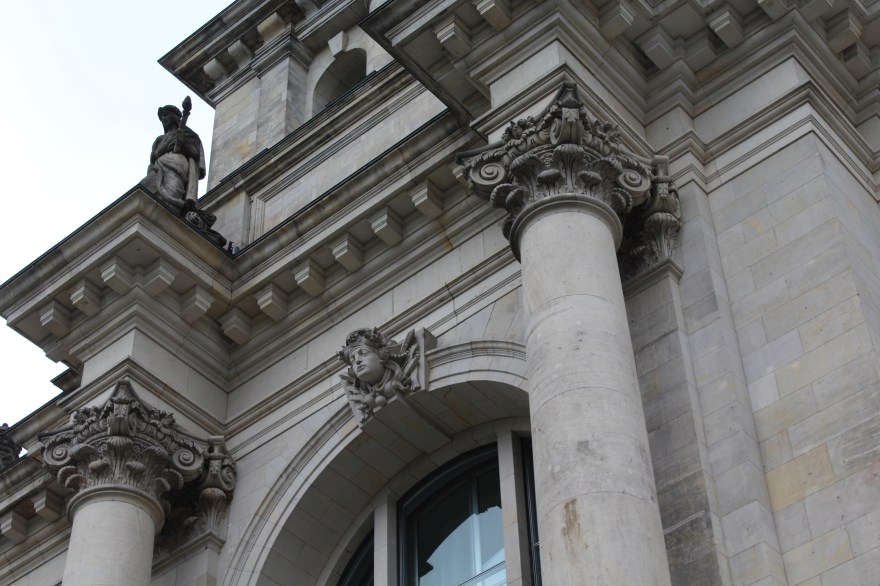
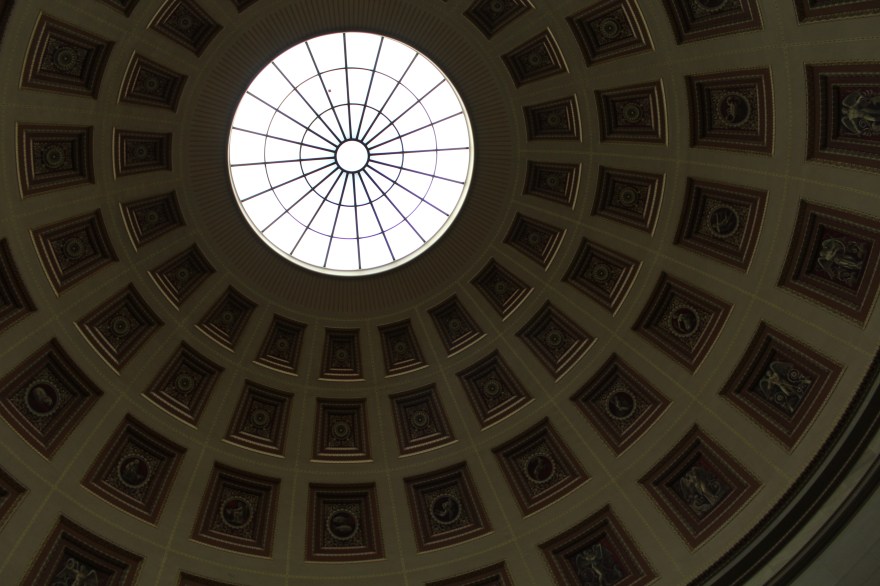
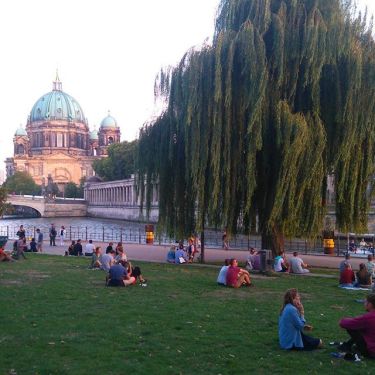
13643565_1076082349149719_139534304_n The architecture I must say is absolutely breathtaking, especially on Museum Island. Everywhere you look there are beautifully shaped buildings. Curved dome roofs, intricate designs and embellishments, magnificent and proudly standing statues, ceiling and wall murals; it is a visual feast! It’s not only the older buildings, but the modern architecture is also truly incredible; tall skyscrapers are built at almost unimaginable angles, with glossy glass windows glinting in the sun from top to bottom, dwarfing you as you crane your neck looking up. Almost everywhere I looked there was something I wanted to draw. Which is why we ended up spending several evenings sat on and near this lawn of Museum Island sketching, drinking and just absorbing the evening atmosphere. This was another thing that greatly appealed to me, the general mood of the city. Although everywhere was crammed with tourists, the pace of life just seemed so calm and tranquil; public transport moved smoothly, people everywhere were laughing and smiling, buskers on this lawn had everyone clapping, people were casually drinking beer in most places we went. It was all just so magical and unforgettable. It stayed light late into the evenings and even when we were full of beer and arted out, we couldn’t help but keep admiring the place. The bridges, the wide wide roads and the cycle footpaths were all so peaceful in the evening light.
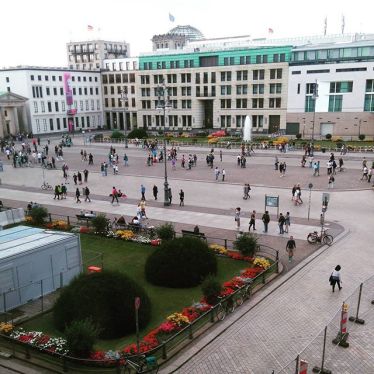
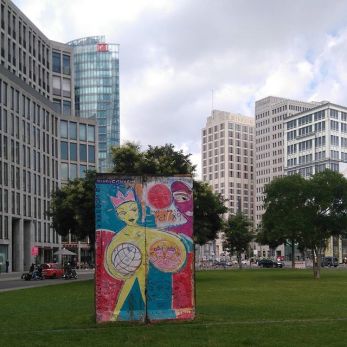
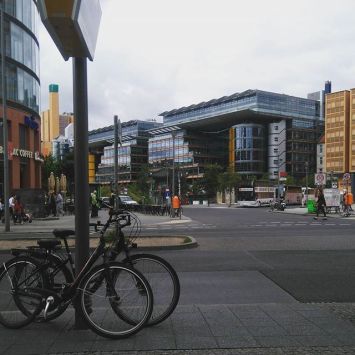
13736970_313800698970078_1931986719_n

We were there for only four nights and for a city as big as Berlin, it was not enough. You need a week at least to do everything you want to do, whilst still allowing time for adventuring down alley ways and seeing where they’ll take you. I have been to Berlin before – in 2013 on a school History trip, which was lovely, but for such an art orientated person like myself, it was not enough. I thought this extra trip back would suffice, but again I am left unsatisfied and with a thirst for more exploring. I feel each trip has to be better than the last (although this one will be hard to beat), because I know I’ll definitely be heading back. Although this time, I will be better prepared for the language barrier. That was tricky. Tourist places do of course speak English, but the little restaurants we discovered off the beaten track were very much native speaking. And neither me nor my boyfriend are the master of the German language. For some bizarre reason, French phrases kept popping into my head every time I tried to converse with a local. It’s good to know I’ll be fine when I get round to visiting France, but it just wasn’t any use in Germany. So my advice to anyone visiting, get a book and learn some of the language!

13643573_1721831444733373_853588388_n

Having now visited Berlin twice, once in winter and once in scorching hot summer (my pale self actually got a slight tan – which is an absolute miracle!) it was really interesting to see the contrast of the seasons. Mainly because of the fashion. The Germans have such an effortless look, they could throw on a black binliner and look like they owned it. I think European style in general just tends to have that effortless, ‘I just threw this on’ look; whether they’re snuggled up in thick coats and winter scarves, or wearing cascading summer dresses and ripped up mini shorts. I think the fact that a lot of them smoke also contributes to this glamorous aura. I’m not saying smoking is good, I’m just saying some people really do look good with a cigarette between their lips. Having now branched into visiting more of Europe with Amsterdam and Berlin under my belt, I am beginning to realise that I could happily live there. Or live abroad at least. There’s something mesmerising about a place that isn’t home. The very fact that you could eat a sandwhich for breakfast in Berlin delighted me, as I am very much a traditional breakfast eater with porridge and coffee generally the norm. Yet in Berlin you can have a breakfast consisting of a mozzarella and tomato sandwhich (to die for!), a sandwhich absolutely crammed with brae, croissants with sausages and cheese melted through them – an endless and yummy variety of options. I am very much a social meal eater. If I am alone, I couldn’t care less about food and I just eat for the sake of fueling my body. However when I am with other people, I absolutely love making an occasion of it; having a late breakfast, eating a long lunch, people watching from the cafe you’re sat in. Sometimes I think drinking tea and observing the world is one of the most peaceful past times that I would be happy to do forever, especially in a city as bustling and exciting as Berlin.

14026622_1817975838422439_387462902_n

So if you’re planning your next holiday, think of Berlin. Think of the buildings. Think of the art. Think of the history. Considering Berlin was not long ago divided by the Iron Curtain and had a Communist regime imposed in East Berlin by the GDR, the composition of the city; it’s infrastructure, it’s culture and it’s economy is incredibly impressive, particularly given it’s rapid progress. These features all show that despite it’s bleak and dark history, Berlin is a place that is very much orientated on the present, and what a superb present it is.

Creative Outlets

13687254_141506512950038_1833900222_n“I think that the very great artists were not trying to express themselves.They were trying to trap the fact, because after all, artists are obsessed by life and by certain things that obsess them that they want to record. And they’ve tried to find systems and construct the cages in which these things can be caught.” – Francis Bacon, Tate Liverpool ‘Invisible Rooms’ exhibition catalogue
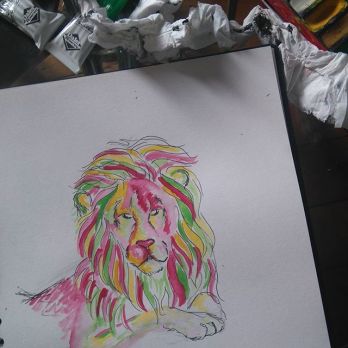
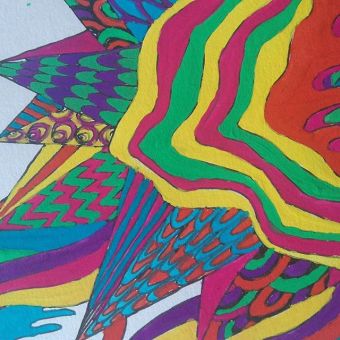
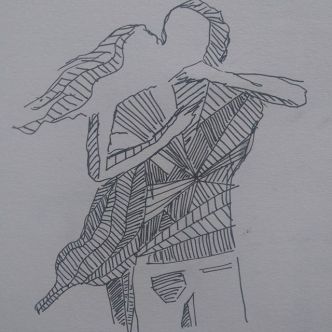
I read this quote last night and it has stuck with me as I tried to grapple with Bacon’s analysis in relation to my own work. In my view he is absolutely right, artists are obsessed with life; whether it is the architecture we live in, our own bodies, nature and the natural environment, urbanism, industrialism, consumerism. You name it. We’ve made art about everything. Art in a sense could almost be compared to science. It is a route to discovery, a journey of experimentation and deduction. Much like scientists employing  mathematics in an attempt to predict the movements of particles, artists engage with their surroundings and various mediums in an attempt to express themselves and their ideas. Conceptual art is at the forefront of modern art today, as by utilizing artworks as tools we are able to realise an idea and convey it to a public audience. Yet there is also and will always be the most expressive form of art; art that does not require proposals and adherences to restricted budget costs, art that does not require a white cube gallery space to be displayed in, but art that simply is from the self. Raw, unaltered sketches, drawings, illustrations and doodles. The purest form of expression and that emotional/creative release.

13735868_264947560551635_1114348383_n

Doodling culture and the professional art world have more in common than most people initially think as they are both incredibly different, yet simultaneously the same. Yes, in galleries there are large scale installations and elaborate industrial sculptures Jeff Koons style, but it all began in the artist’s mind. It quite likely originated with a little paper doodle or a frantic sketch on a table napkin at the crucial moment of realising the sketchbook was left on the coffee table at home. I feel in a lot of cases there are too many barriers between ‘high’ and ‘low’ art forms, too many words that separate what is classified as good and not so good work. Of course, personal taste and style plays a vital part in these judgements as negotiating personal opinion is one of art’s main experiments; to make people question, to challenge them into realising what it is they do and don’t like is at the core of several artistic practices. In a lot of cases however it is the observers who validate what qualifies as good and bad artwork, who make the official distinction which everyone should follow.

13741139_1834179690139235_442586275_n

Like anything else in this world, people are happy to follow trends. Whether that is reading a book that everyone else is reading, engaging with an artist who everyone is talking about, visiting an exhibition that everyone else has seen. Despite the creation of artwork being one of the purest forms of human expression and the most individual and personal entity in human existence, art  is still not exempt from the trap of following what is considered mainstream. In a sense however, this actually makes it more interesting as you could ask the question who do we make art for? In this day and age, with the pace of social media and the digital information we are constantly fed, there is a heightened sense of expectation in artmaking and inevitably, artists react to this. So who do artists actually make art for? Is it purely for themselves as the most raw forms of self expression? Is it for an art based audience who will engage with it in the way that the artist themself has? Or is it for a public audience, whose art background and knowledge is probably sparse? Or does it fall within all of these categories? It’s interesting as in a lot of cases I would say it is a combination. You often make art for different purposes which include selling, giving as presents and so these distinctions in themselves also affect the purpose and thinking surrounding the making of the piece.

13745080_1066762653392291_342997592_n

I’m not criticising any of these modes of artmaking. I think art is personal and the purpose of the artwork extends within that personal realm. Each person is different, as is each artwork and artist. I know that my artwork varies a lot of the time depending on audience, how I’m feeling, whether it’s for myself or for display. Given that traditionally and throughout human history art has been hung on the wall in Salons and grand entrance halls for all people to see, it is ironic that my art is actually very private. My doodles are my ‘me time’ turned into physical forms. I find it soothing to get lost in a swirling world of colour and fine lines as I carefully navigate across the page. My performances are less concentrated and more physical expressions of my innermost thoughts which can only be conveyed and released through this immersive and bodily art form. I think the reason Bacon’s quote caught me was because I myself can relate to it quite strongly. Although it is not always a conscious decision, life is fundamentally a core part of my artwork. As Eva Hesse once said “my inner soul art and life are inseparable”.


A Time of Reflection

13712308_1071104132967442_105789848_n

I’ve been away from the blog for a while as I felt I needed some reflection time. Time to stop and contemplate. Time to consider and reflect. I wanted to take a step back from everything following the pace of life during degree show period. Both my creative and mental energy had been wholeheartedly consumed and I therefore decided to withdraw from participating in physical elements in favour of simply reading some theory. The fact I am now studio-less has partly contributed to this shift in thinking. Not that I’m saying you need a studio to make art, I’m just saying I am currently in the adjustment phase and therefore having a break. Yet when I say that and taking time out, I’m lying. I am not a person who takes time out and does nothing – that’s just not in my nature. I get twitchy and start doing the washing up or something. For me taking time out is putting a pause on the practical. Performance for the time being is not on the cards. But my creativity is still bubbling away as I have been dabbling in light painting activities and a little bit of photography. Yet these activities in themselves have been scarce as I’ll be consumed in a doodle mood one minute and then the next my sketchbook goes untouched for days. Books instead have become my predominant creative outlet for the time being.

13707345_1753872148164301_1979226587_n

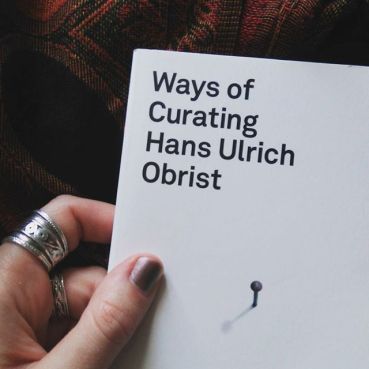
Have you ever read a book that changed your life? Or that you feel will stay with you for a very very long time? Well, that happened to me the other day with Hand Ulrich Obrist’s ‘Ways of Curating’. What a read! I have not ripped through a book so quickly in a long time. Having said that, I didn’t really have a spare minute over deadline and degree show time.  Yet now that I have finished my degree, I have been sat reading in cafes and in the garden, watching people go by and observing daily life. Contemplating. Thinking. I’ve come to realise that my mind is very much designed for research; for absorbing information, words and visuals. I will be moving to Edinburgh next month to embark on an MSc in Modern and Contemporary Art: History, Curation and Criticism (I am aware that is quite a mouthful!) I could not be more excited as I feel Edinburgh is the perfect transition from Newcastle. In the interim period however I have been in Aberdeen, which is the city of death for anyone or anything creative in my opinion. I’m not saying that’s the case in every instance, but the lack of gallery visits is starting to agitate me. All the more reason that books have become my seducer.

13722143_1066982280063473_611571647_n

‘Ways of Curating’ by Obrist has left quite the impression on me. Obrist is a world-renowned curator, critic and art historian. He is currently director at the Serpentine Galleries in London, has published a wide array of books, conducted endless artist interviews and revolutionized the way in which we think of curation. Needless to say, I found him and his professional exploits quite inspiring. Prior to reading this book, I had always viewing curating as quite a static activity. Arranging and rearranging the works of an artist in a room. Conversing with said artist to gauge their artistic needs. Engaging public with the final displayed work, etc. etc. How wrong I was! Obrist entirely transforms my way of thinking about curation with his discussions of shifting and temporal artistic platforms, the idea of curation as an artistic practice itself, the importance of stimulating conversations and the methodologies which surround and extend and exhibition beyond itself and into forms such as 24hr conversation marathons. For the first time, curating actually appeals to me as it is so much more than arranging art in a room. It is about bringing people together. About exchanging ideas and bridging cultures. It is about travelling and exploring. It is a journey of creation.

13734459_1172724706104420_1385617542_n

It’s been a strange few weeks for me as I go from being a full time art student with a public show and a studio in the vibrant city of Newcastle, to being a graduate living in the granite grey city of Aberdeen over summer. Quite the shift. Yet it’s been a transformative one. I feel I have learnt from my period of non-production. I almost feel it has taught me more than when I am fully absorbed in my artwork. Somewhat ironic I know, but in those moments as I am fully aware of myself as a creative and an artist, yet it’s only really after all this reading and reflecting that I realise how much of a thinker I am. You might wonder why I have not turned to writing more given this has become the case. I’m not sure myself really, I just did not feel compelled. I suppose even that felt too creative. I wanted simply to sit back and read about others being creative and harness my energy through them. And I think it’s been a good idea as I am now inspired and itching to create again, in one way or another. I’m definitely hoping for a residency at some point. I am off to Berlin not long from now and for me that is just as much a research trip as a holiday with all of the beautiful art galleries and historical museums I’ll be visiting!